Real Estate News

Smart Home AV Integration in Luxury Real Estate
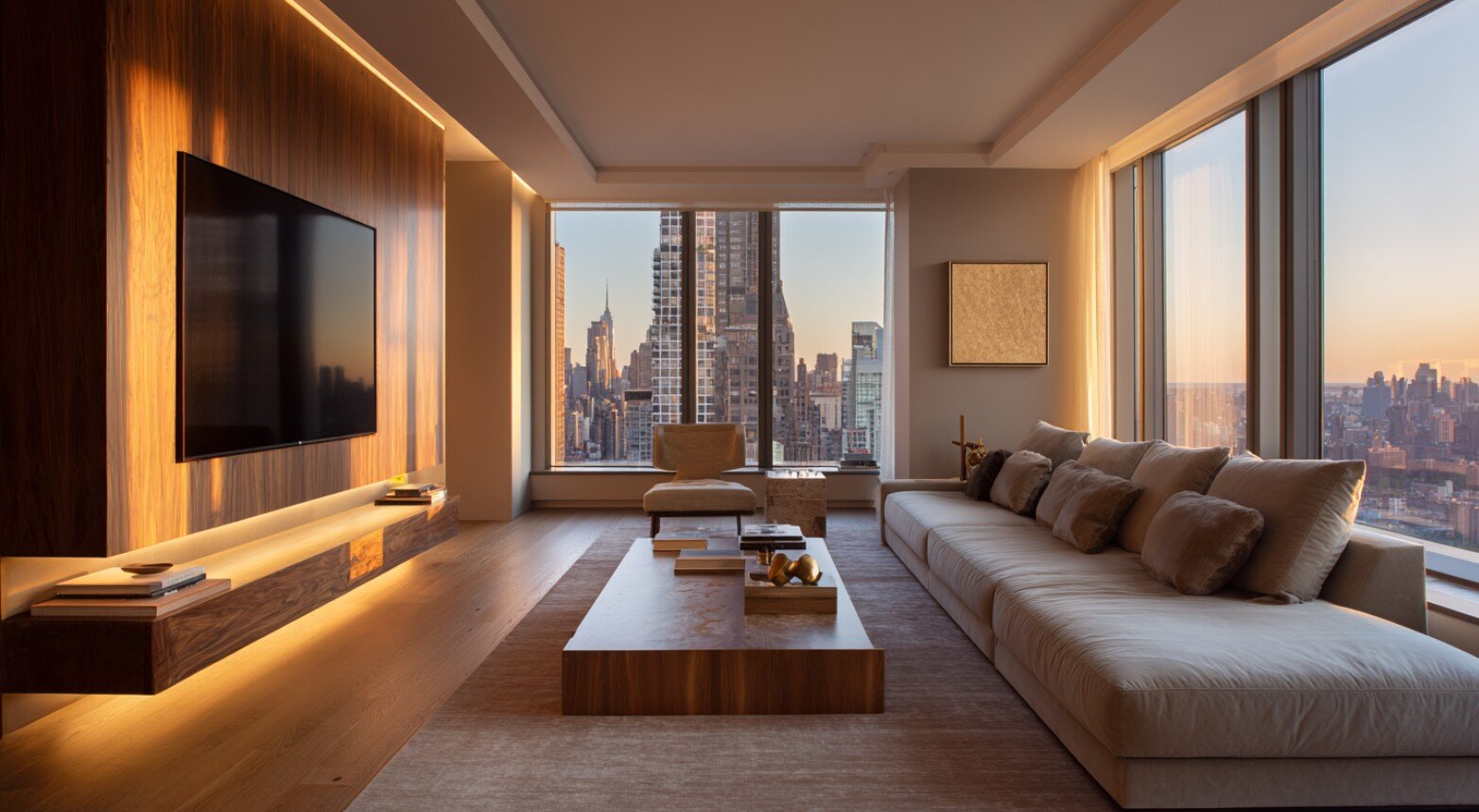
A decade ago, luxury home buyers asked about wine cellars, fitness rooms, and chef's kitchens. In 2026, those features still matter -- but they have been quietly displaced at the top of the buyer checklist by something less visible: the property's audio-visual stack. Integrated AV is no longer marketed as a premium add-on alongside climate control or smart lighting. It now sits in the same baseline tier. Listings in Miami, Manhattan, Aspen, and Los Angeles increasingly call out AV systems as their own line item, the way they once called out smart home wiring or geothermal HVAC.
The expectation has also become more specific. Buyers are not impressed by a flat-screen above the fireplace. They are looking for full-home distributed audio, in-wall and in-ceiling speakers that disappear into the architecture, a dedicated home theater room calibrated for reference-grade playback, integration with motorized shading and lighting scenes, and outdoor sound zones reaching the pool deck and terrace. High-net-worth buyers now arrive at showings with their own AV consultants, and the questions are technical: What's the rough-in spec? Is the home theater isolated? Which control platform is installed? Cosmetic answers no longer close the deal.
This shift is reshaping how projects begin. Architects, developers, and homeowners increasingly start renovation and new-build projects by searching for an audio visual consultant near me -- engaging an integration specialist before structural decisions are finalized, rather than retrofitting AV into finished shells. The integrator now sits at the schematic-design table next to the architect and the MEP engineer, not at the end of the punch list.
The New Baseline -- What Luxury Buyers Expect in 2026
The threshold of expectation has risen across every major luxury market. In 2026, a high-end property is assumed to include:
- Whole-home distributed audio with discrete in-ceiling or in-wall speakers in every primary room
- A dedicated home theater or media room with acoustic treatment and reference projection
- 4K and increasingly 8K display capability, with micro-LED or laser projection in flagship projects
- Voice and tablet control via Crestron, Control4, Savant, or comparable platforms
- Integrated lighting, shading, climate, and security on the same control layer
- Outdoor audio zoning across terraces, pools, and landscaped grounds
None of these items reads as a wow-factor anymore. Their absence reads as a deficiency -- a reason to negotiate down, ask for a credit, or walk away.
Pre-Construction Integration vs. Retrofit -- Why AV Is Now Specified Before Drywall
The largest change is procedural, not technological. AV specification has shifted left on the construction timeline. Rough-in wiring, conduit paths, low-voltage runs, in-wall speaker boxes, and rack-room infrastructure now have to be coordinated with framing, electrical, and MEP before drywall closes. A retrofit installation in a completed luxury home routinely costs three to five times more than the same scope installed during construction, and the aesthetic outcome is almost always compromised -- with exposed conduit, surface-mounted speakers, or visible trunking. For developers and project managers, the math is straightforward at the line-item level. Specifying AV early protects both budget and finish quality.
The Home Theater Renaissance in High-End Residential
The dedicated home theater room -- declared dead during the early streaming era -- has returned as a defining luxury feature. Post-pandemic viewing habits, the maturation of object-based audio formats like Dolby Atmos, and the arrival of more accessible reference-grade projection have pushed the home theater back into the program brief for new luxury builds.
A properly specified home theater in 2026 is not a den with a big screen. It is an acoustically isolated room with ISF-calibrated projection or micro-LED, tiered acoustic seating, motorized screens and masking, and a dedicated equipment closet. Investment levels typically range from around $50,000 for upper-mid-market homes to $250,000 and beyond for flagship properties, and appraisers in premium markets are increasingly recognizing their contribution to overall value.
Outdoor and Wellness Spaces -- The New AV Frontier
The newest growth area in residential AV is not inside the house at all. Pool decks, terraces, garden rooms, spa suites, and meditation rooms are now standard zones for integration. Weather-rated outdoor speakers, hidden landscape audio systems buried in planters or hardscape, and wellness-focused installations -- sound bath rooms, biophilic soundscape systems, dedicated yoga spaces -- are appearing in luxury listings from Miami to Aspen to the Hamptons. The wellness category in particular has accelerated quickly, mirroring broader buyer interest in homes that function as long-term wellness environments rather than entertainment venues alone.
The Acoustic Layer -- Why AV Performance Depends on Soundproofing
A reference-grade AV system will not perform as intended in an untreated room. This is the part of the conversation that developers and owners most often underestimate, and it is where the most expensive correction work tends to land. Room modes, flanking noise through shared walls and floors, mechanical noise from HVAC, and inadequate isolation between a home theater and the rest of the house can each compromise the experience that a six-figure AV stack was purchased to deliver. In high-density condominium projects, neighbor isolation is not optional -- it determines whether the system can be operated at intended levels at all. The market response has been clear: luxury clients increasingly engage AV integrators and acoustic consultants as a single coordinated team, or hire a firm that offers both disciplines in-house.
How AV Specification Affects Resale Value and Time-on-Market
Brokers in premium markets consistently report that fully integrated AV-equipped homes spend less time on the market and close closer to asking than comparable properties without integration. The signal is strongest at the upper end, where buyer pools are smaller, more technical, and less willing to absorb retrofit risk. A finished, calibrated AV environment removes a category of post-purchase friction that high-net-worth buyers have grown unwilling to take on themselves. The reverse is also true: a luxury property that requires the buyer to specify, install, and commission AV after closing is now read as incomplete, regardless of the rest of the finish package.
What Developers and Owners Should Look for When Engaging an Integrator
The vetting criteria for integrators have matured alongside the market. Beyond the basics, owners and developers should look for:
- Recognized certifications, such as CEDIA, ISF, and THX, supported by current technician credentials
- A documented portfolio in the relevant property class and price band
- In-house acoustic engineering capability, not just AV product installation
- Demonstrated ability to work from schematic design -- coordinating with architect, MEP, and structural -- rather than only from a finished shell
- Local presence in the project market, with working knowledge of regional building codes, condo board requirements, and the acoustic realities of the local building stock (prewar Manhattan envelopes behave nothing like Miami new construction)
The right integrator should be on the project at the same stage as the structural engineer, not the interior designer.
A Single-Team Operating Model for the Luxury Segment
The convergence of AV integration and acoustic engineering has produced a new category of specialist firms serving the luxury residential market. Companies like New York Soundproofing -- which delivers audio-video system installation, home theater design, sound system installation, and full acoustic treatment for residential and commercial projects across New York, New Jersey, Pennsylvania, Chicago, San Francisco, and Seattle -- illustrate the operating model that high-end developers and owners increasingly demand: a single team handling both the AV stack and the room conditions that make it perform. For luxury projects where the gap between specification and outcome is measured in millions of dollars of value, that integrated approach is no longer optional.