Commercial Real Estate News

Manhattan Retail Tightens as Availability Hits Record Low in Early 2026
Manhattan's prime retail corridors tightened further in the first quarter, with availability falling to the lowest level on record even as consumer spending showed signs of strain, according to a new report from JLL.
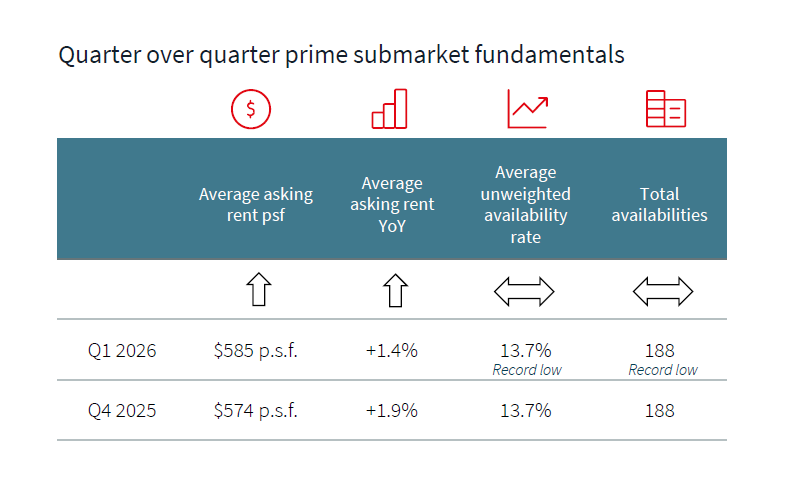
Average availability across key shopping districts -- including Fifth Avenue, SoHo and Times Square -- held at 13.7% in the first three months of 2026, matching the prior quarter and marking the lowest level since tracking began in 2017.
The continued tightening underscores a multi-year recovery in New York retail, with vacancy rates down sharply from pandemic-era highs. Annual average availability has fallen from more than 21% in 2019 to roughly 14% in 2025, reflecting steady absorption of space across prime corridors, according to JLL.
Rents, however, are showing a more fragmented picture.
Average asking rents across prime submarkets edged up to $585 per square foot in the first quarter, a modest increase from $574 in the prior period and broadly in line with 2025 levels. But performance varied widely by location, highlighting a market still adjusting to shifting foot traffic patterns and consumer behavior.
Downtown neighborhoods led the tightening. SoHo availability dropped to a record low 9.1%, while the Meatpacking District and Herald Square also posted declines in available space. At the same time, rents in the Meatpacking District jumped 11% quarter-over-quarter and are up more than 20% from a year earlier.
By contrast, some of the city's most prominent retail corridors showed softness. Asking rents fell on Madison Avenue and in SoHo during the quarter, while Times Square -- still contending with elevated vacancy -- saw year-over-year rents decline sharply despite a quarterly increase.
The divergence reflects both tenant demand and the evolving mix of retailers entering the market.
Leasing activity in the quarter included a mix of experiential tenants, discount retailers and food concepts. Large deals included a 54,000-square-foot lease for the Balloon Museum at the Seaport and a 47,000-square-foot transaction by Chelsea Piers in Hudson Square, signaling continued demand for destination-oriented uses.
Still, broader economic signals point to a more cautious consumer backdrop.
Economic activity softened slightly in early 2026, with flat employment and modest wage growth, while consumer spending increased only marginally. Households remained price-sensitive, often shopping across multiple outlets to find value.
Weather also played a role, with a harsh winter dampening foot traffic and weighing on smaller retailers, even as food and beverage operators saw some resilience.
The result is a retail market defined by constrained supply but selective demand -- where prime space is increasingly scarce, yet pricing power remains uneven.
JLL says that dynamic is likely to persist through 2026, as landlords balance limited availability with tenants navigating a still-fragile consumer environment.