Residential Real Estate News

U.S. Mortgage Rates Rise as Iran Conflict Fuels Inflation Fears
U.S. mortgage rates moved higher this week as escalating geopolitical tensions in the Middle East and renewed inflation concerns rippled through global financial markets, adding fresh pressure to an already strained housing sector.
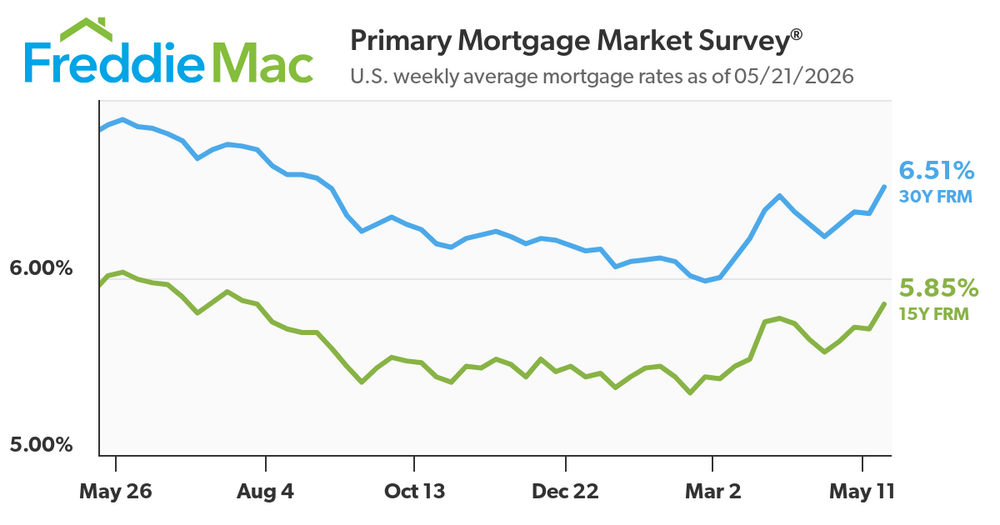
According to Freddie Mac's latest Primary Mortgage Market Survey (PMMS), the average rate on a 30-year fixed mortgage climbed to 6.51% for the week ending May 21, up from 6.36% a week earlier. Despite the increase, rates remain below the 6.86% level recorded during the same period a year ago.
The average rate on a 15-year fixed mortgage also rose, increasing to 5.85% from 5.71% the previous week. A year earlier, the 15-year loan averaged 6.01%.
"The 30-year fixed-rate mortgage averaged 6.51% this week," said Sam Khater, chief economist at Freddie Mac. "As rates fluctuate, aspiring buyers should remember that by shopping around for the best mortgage rate and getting multiple quotes, they can potentially save thousands."
The latest increase comes amid heightened market volatility tied in part to the ongoing Iran conflict, which has pushed oil prices higher and reignited concerns about inflationary pressures across the global economy. Investors have increasingly focused on the potential impact of rising energy costs on consumer prices, transportation, manufacturing, and supply chains.
Mortgage rates are closely linked to movements in the U.S. 10-year Treasury yield, which has risen in recent weeks as traders reassess expectations for inflation and future Federal Reserve interest rate policy. Higher Treasury yields generally translate into higher mortgage borrowing costs for consumers.
Analysts say geopolitical instability in the Middle East -- particularly concerns surrounding oil supply disruptions through the Strait of Hormuz -- has added another layer of uncertainty to financial markets. Elevated energy prices can complicate the Federal Reserve's efforts to bring inflation fully under control, potentially delaying anticipated interest rate cuts later this year.
The rise in financing costs continues to weigh on housing affordability nationwide, particularly for first-time buyers already facing elevated home prices and limited inventory. While mortgage rates remain below last year's peaks, economists say borrowing costs in the mid-6% range continue to challenge affordability across many U.S. housing markets.
Freddie Mac's weekly mortgage survey remains one of the most closely watched indicators of U.S. housing finance conditions and is widely used by lenders, builders, investors, and policymakers to gauge market direction.