Residential Real Estate News

U.S. Single-Family Rents Cool to 15-Year Lows in Late 2025
Single-family rent growth across the U.S. decelerated sharply at the end of 2025, underscoring a broad cooling in housing demand and rising tenant leverage in several Sun Belt markets.
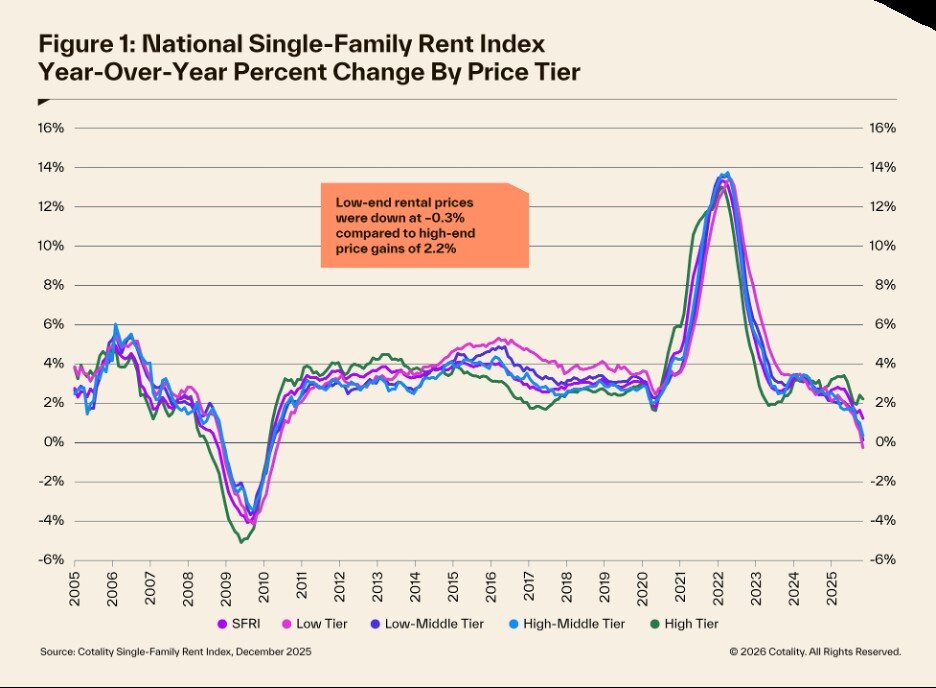
National rents for single-family homes rose 1.2% in December 2025 from a year earlier, according to Cotality's latest Single-Family Rent Index (SFRI). That marks a steep slowdown from the 2.5% annual gain recorded between December 2023 and December 2024, and leaves rent growth hovering near its lowest level in almost 15 years.
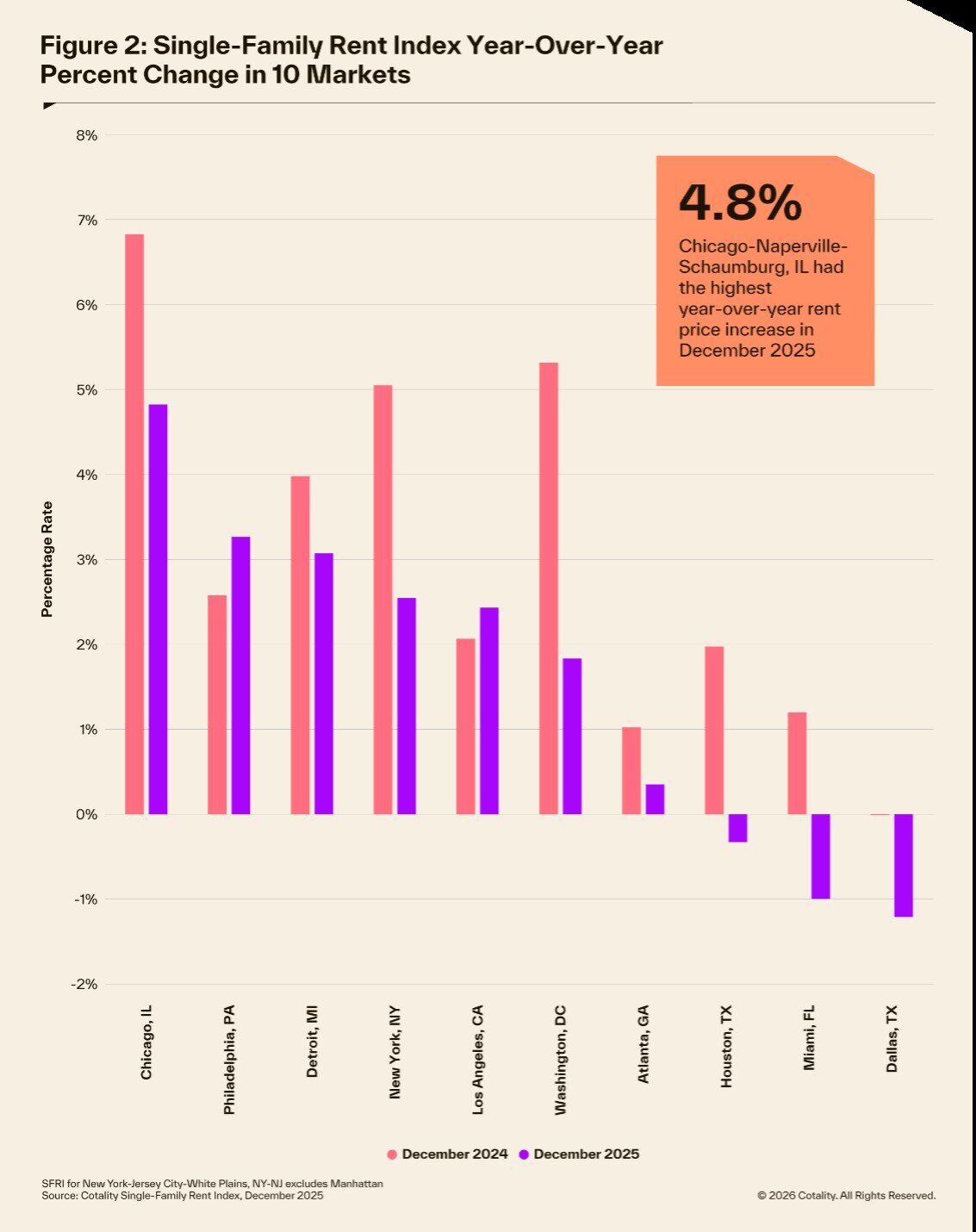
The pullback was widespread. Thirty-five of the 50 largest U.S. metropolitan areas posted slower annual rent growth in December 2025 than a year prior, while 18 metros recorded outright year-over-year declines. Florida accounted for eight of those drops, with three in Texas and two in Arizona -- regions that had previously led the nation in post-pandemic rent acceleration.
"The single-family rental market ended 2025 on a notably softer trajectory," said Molly Boesel, senior principal economist at Cotality. "Persistently high multifamily vacancy rates are giving renters meaningful leverage, softening rents even in the single-family segment."
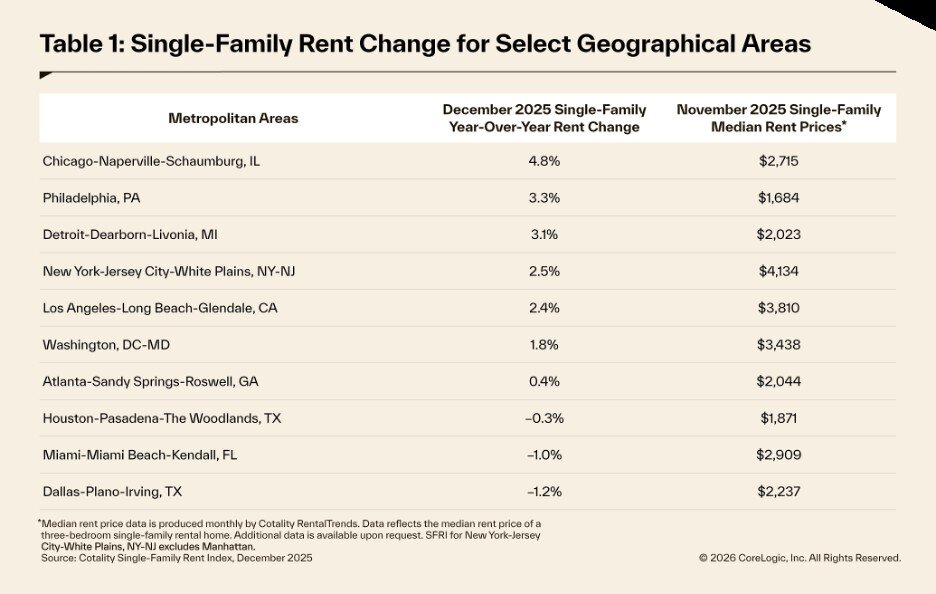
Midwestern and Northeastern markets showed relative resilience. Chicago led the nation for the third consecutive month, posting 4.8% annual rent growth in December. Philadelphia followed at 3.3%, trailed by Detroit at 3.1%. The New York-Jersey City-White Plains metro saw rents rise 2.5%, while Los Angeles posted a 2.4% increase.
By contrast, several large Sun Belt metros remained under pressure. Dallas recorded a 1.2% annual decline, while Miami fell 1% and Houston slipped 0.3%. Elevated apartment supply in those markets has spilled over into the single-family rental sector, limiting landlords' pricing power.
The data also point to a widening divide across income tiers.
High-end single-family rents rose 2.2% year over year in December, down from a 2.8% gain the prior year but still close to their long-run average. In contrast, low-end rents fell 0.3% -- a sharp reversal from the 2.8% increase recorded in December 2024.
The divergence highlights what economists describe as a "K-shaped" housing market, in which higher-income households remain relatively insulated while budget-constrained renters face affordability pressures and heightened competition from newly delivered multifamily units.
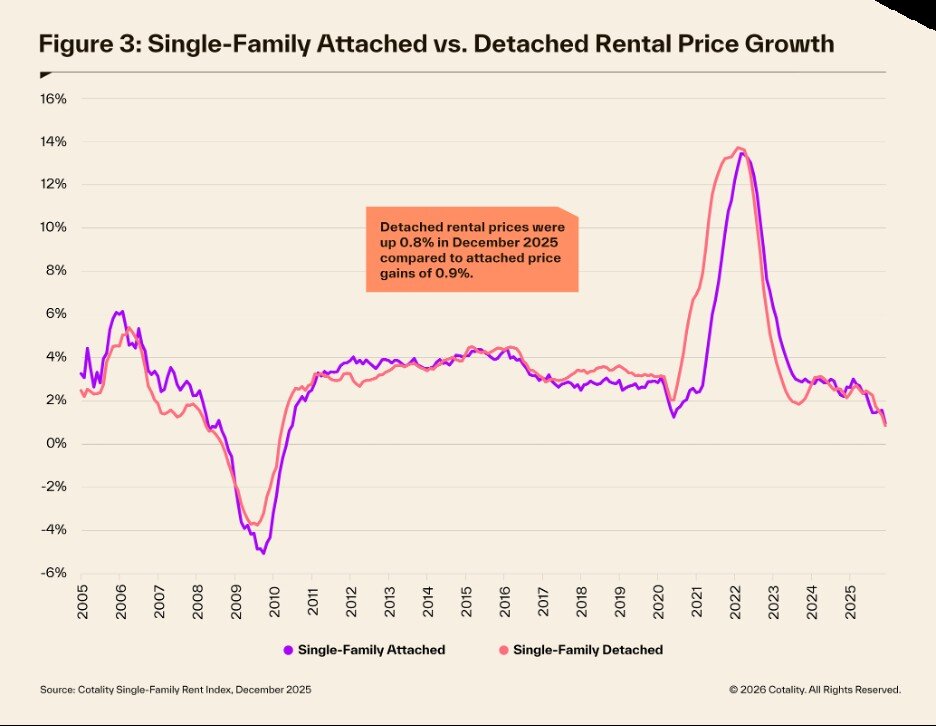
Detached rental homes saw rents increase 0.8% annually in December, slightly below the 0.9% gain for attached properties, indicating broadly similar demand conditions across housing types.
With rent growth near multi-decade lows and supply still elevated in several high-growth states, landlords may face continued pricing constraints in early 2026. For renters, however, the shift signals improved negotiating power after years of rapid cost increases -- though affordability challenges remain entrenched across much of the country.