Residential Real Estate News

U.S. Luxury Home Prices Outpaced the Broader Market in 2025
Inventory Constraints Fuel Selective Bidding
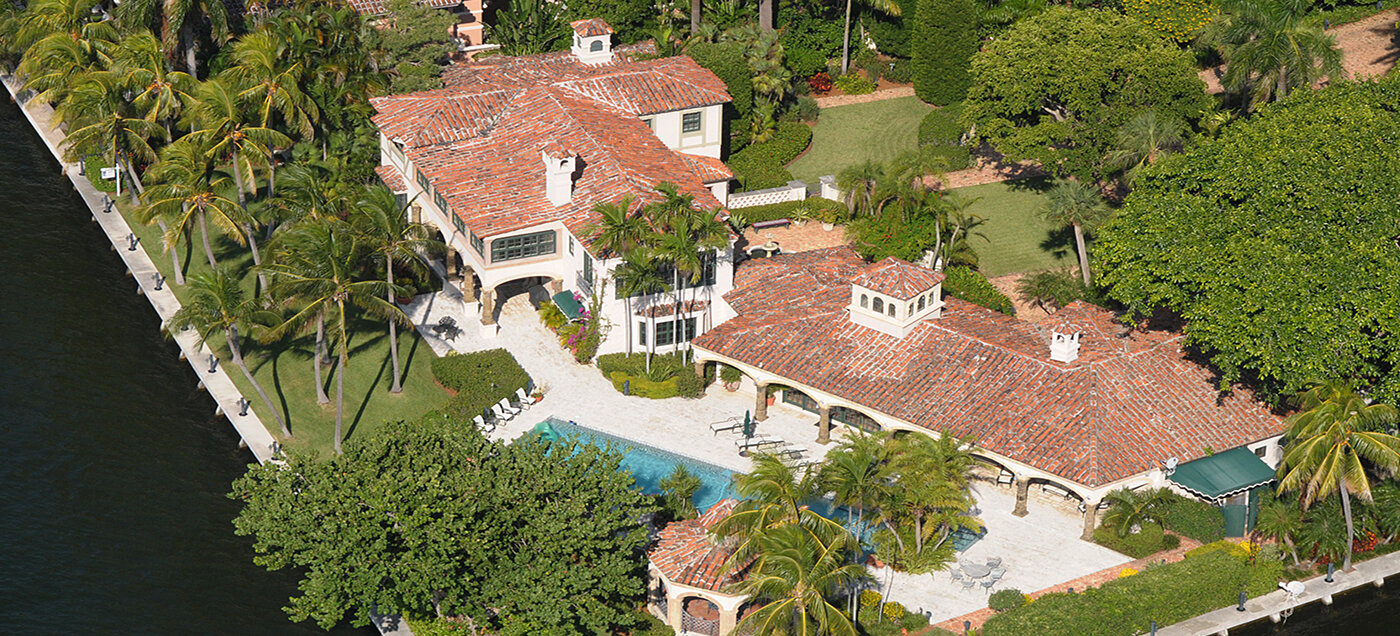
The median sale price of a luxury home in the United States climbed 4.6% from a year earlier to $1.31 million in December, significantly outpacing gains in the broader housing market, where non-luxury prices rose just 1.4% to $375,000 -- the slowest rate of appreciation recorded since tracking began in 2013.
Price declines at the high end were rare, with only two major metropolitan areas -- Fort Worth, Texas, and Portland, Oregon -- posting year-over-year decreases in luxury home values.
The figures are based on a Redfin analysis of Multiple Listing Service transactions covering the October-through-December 2025 period, which the firm refers to as "December" data. All metrics represent rolling three-month averages aligned with the fourth quarter and remain subject to revision. Redfin classifies luxury homes as those within the top 5% of a metro area's estimated price distribution, while non-luxury homes fall between the 35th and 65th percentiles.
Selective Demand, Limited Supply
Rising luxury prices appear to be driven less by broad-based demand and more by constrained inventory of highly desirable properties, according to Alin Glogovicean, a Redfin Premier real estate agent in Los Angeles. Elevated mortgage rates and already-high valuations have made buyers -- including affluent households -- increasingly selective, concentrating competition on a narrow band of listings that meet exacting standards.
Well-located, move-in-ready homes are still attracting multiple bids and, in some cases, all-cash offers with waived contingencies. Sellers of premium properties in prime neighborhoods can command sizable premiums above asking prices, while less compelling listings face longer marketing times.
Pending Sales Slip as Market Momentum Softens
Signs of cooling momentum are emerging beneath the surface of headline price gains. Pending luxury home sales fell 1.1% year over year in December, marking the steepest decline in six months. Pending transactions for non-luxury homes declined 0.6%, the largest drop in eight months.
Closed sales -- a lagging indicator of demand -- showed modest resilience at the top of the market, with luxury transactions edging up 0.4% from a year earlier. By contrast, completed sales of non-luxury homes slipped 0.7%.
Inventory Growth Slows
Supply conditions also point to a market losing some forward momentum. Active listings of luxury homes increased 5.6% from a year earlier, the slowest pace of growth since April. Non-luxury inventory rose 7%, also representing a deceleration and the weakest expansion since early 2024. Analysts attribute the moderation in new supply partly to subdued buyer activity and seller hesitation.
New luxury listings rose 2.9% year over year, while new non-luxury listings declined 2.4%, underscoring a widening divergence in seller behavior between market tiers.
Homes Take Longer to Sell
Marketing times lengthened across both segments. The typical luxury home that went under contract in December spent 64 days on the market, five days longer than a year earlier and the slowest December pace since 2020. Non-luxury homes moved more quickly but also slowed, taking a median 50 days to secure a contract -- six days longer than the prior year and the slowest December since 2019.
Regional Divergence Widens
Performance varied sharply across major metropolitan areas:
- Prices: Luxury values posted the strongest gains in Milwaukee, Orlando, and Nashville, while Fort Worth and Portland were the only large metros to register declines.
- Pending Sales: West Palm Beach, San Francisco, and Tampa led increases in luxury pending transactions, whereas San Jose, Philadelphia, and New Brunswick recorded the steepest drops.
- Active Listings: Inventory expanded most in Tampa, Detroit, and Nashville, while San Jose, Philadelphia, and Milwaukee experienced the largest contractions.
- New Listings: Detroit, Kansas City, and Tampa saw the biggest influx of new luxury properties, while Milwaukee, New York, and Warren, Michigan posted the sharpest pullbacks.
- Speed of Sales: Luxury homes sold fastest in San Jose, Oakland, and St. Louis, and slowest in Miami, Fort Lauderdale, and West Palm Beach.
Taken together, the data depict a bifurcated housing landscape in which headline luxury price gains mask softer transaction volumes and lengthening sales cycles. The upper tier of the market remains supported by wealth concentration and cash-heavy buyers, but constrained inventory and heightened selectivity are increasingly shaping outcomes city by city.