Residential Real Estate News

America's Single-Family Rent Boom Loses Steam in Late 2025
Florida markets lead the nation's rent pullback after years of rapid growth
Single-family rent growth across the U.S. slowed sharply in October 2025, underscoring a broad normalization in the housing market after years of pandemic-era gains, according to new data from Cotality.
Cotality's latest Single-Family Rent Index, which tracks rent changes nationally and across major metropolitan areas, showed rents rising just 0.9% from October 2024. That compares with a 2.8% increase recorded in the same period a year earlier, marking a pronounced deceleration in annual growth.
The slowdown was widespread. Forty of the 50 largest U.S. metro areas posted weaker rent growth than a year earlier, and 18 metros recorded outright year-over-year declines. Half of those declines occurred in Florida, highlighting a growing correction in markets that had previously seen some of the fastest rent appreciation in the country.
"While this moderation is notable, rents remain elevated compared to pre-pandemic levels," said Molly Boesel, senior principal economist at Cotality. "Annual growth peaked in March 2022, and even after three years of slowing, the national index in October was still 9% higher than the 2022 average level. This trend reflects a normalization process rather than a reversal, as affordability challenges and regional dynamics continue to shape rent performance."
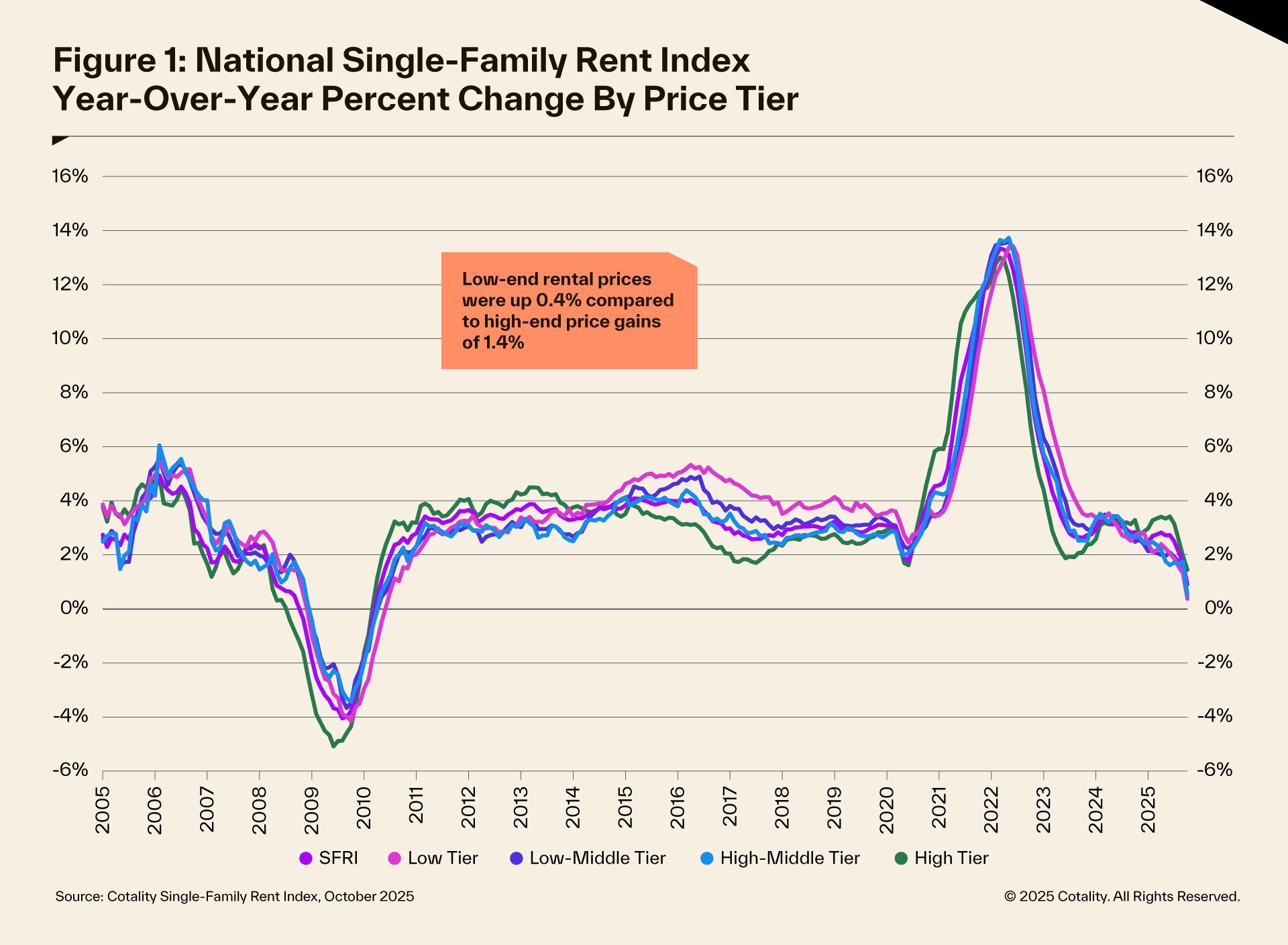
Price pressures eased across all segments of the rental market, with the slowdown most pronounced at the lower end. Rents for high-end single-family properties rose 1.4% year over year in October, down from a 3.3% increase in October 2024. Low-end rents climbed just 0.4%, compared with a 2.7% gain a year earlier, suggesting that affordability constraints are weighing more heavily on cost-sensitive renters.
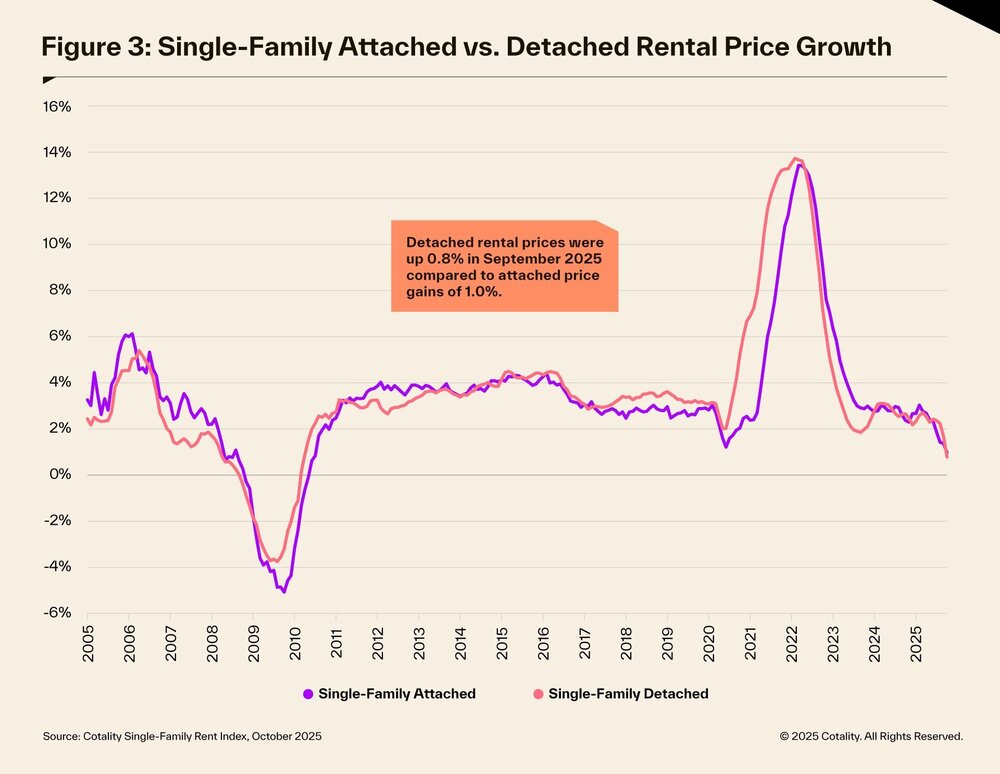
By property type, rents for detached single-family homes increased 0.8% year over year, while attached rentals posted a slightly stronger 1% gain.
Regional divergence continues to widen as the market cools. Florida metros such as Cape Coral and North Port have now logged two consecutive years of annual rent declines, signaling a pullback after outsized pandemic-era increases. In contrast, parts of the Midwest have remained relatively resilient, supported by steadier demand and more moderate price levels.
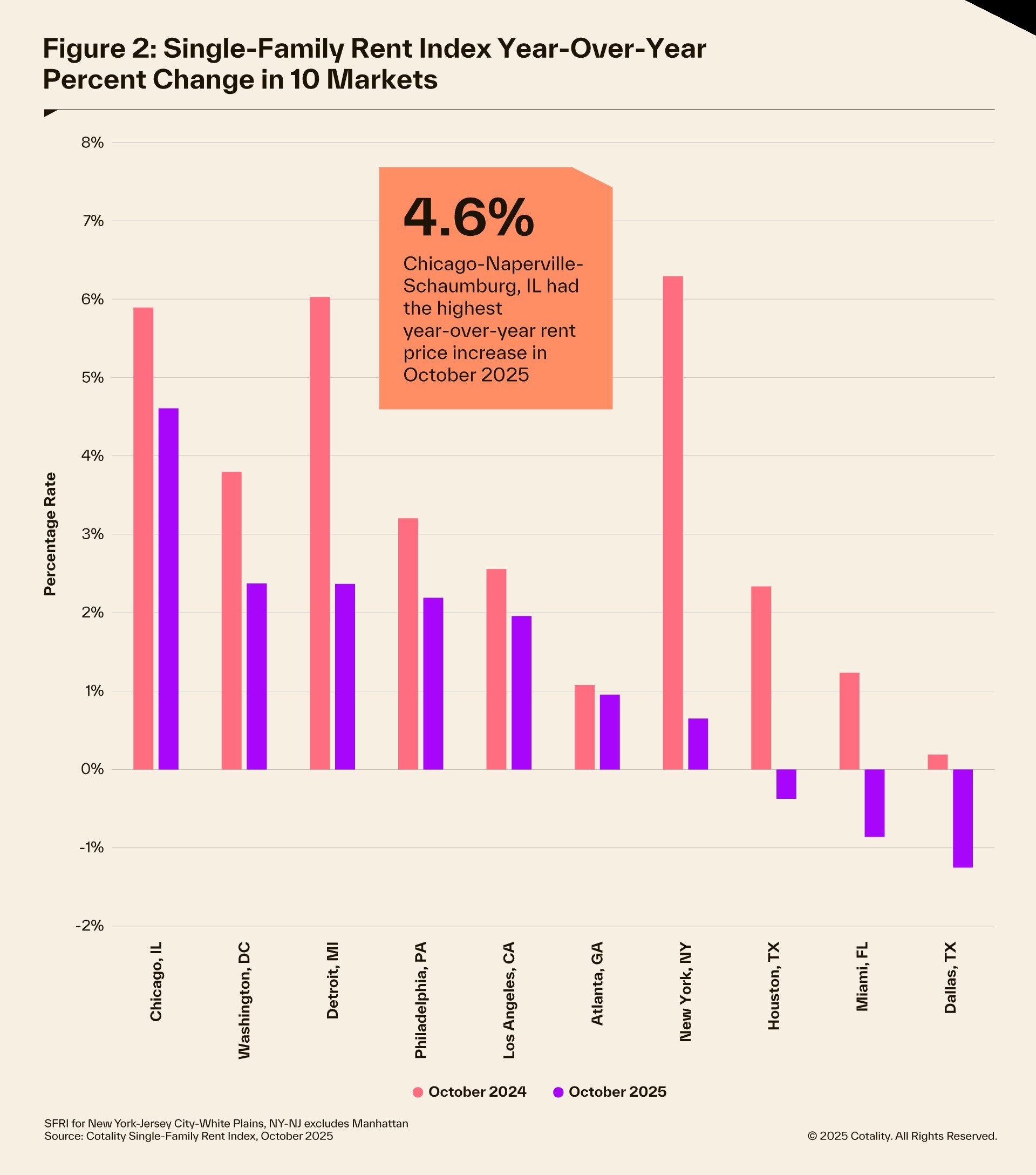
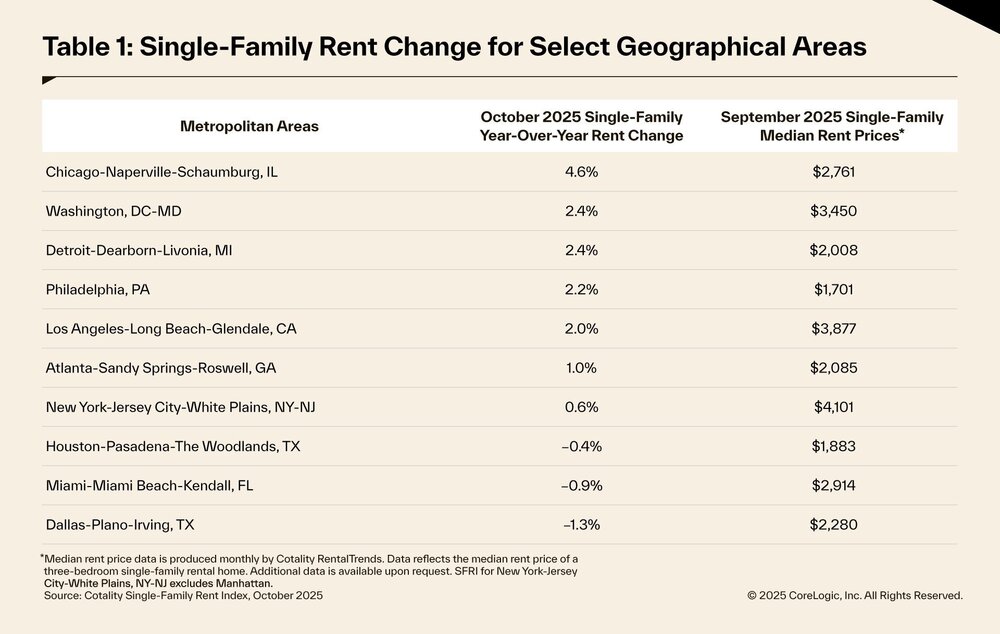
Among the 10 largest U.S. metro areas, Chicago led the nation with rent growth of 4.6% in October. Washington, D.C., and Detroit followed at 2.4%, while Philadelphia posted a 2.2% increase. Los Angeles rounded out the top five with growth of 0.6%.
At the other end of the spectrum, Dallas continued to lag the nation, with single-family rents falling 1.3% year over year.
Taken together, the data point to a market that is cooling but not collapsing. Rent growth is slowing from historically elevated levels, with affordability pressures and local supply-demand dynamics increasingly determining where prices rise--and where they retreat.